 Image 1 of 1
Solidarity Across Distance For Researchers, & Changemakers Supporting Communities from Afar
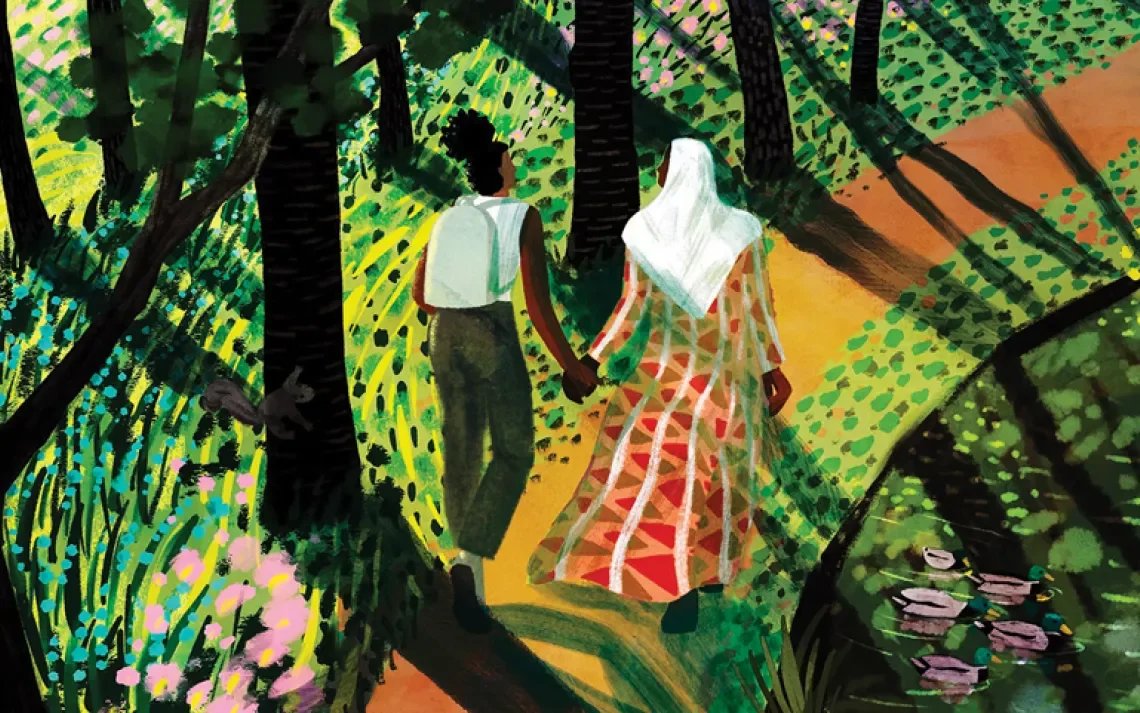
{Featured Photo: Illustration by Sirin Thada from Sierra Magazine article I wrote}
I'm hosting a gathering specifically for researchers, changemakers, humanitarian workers, documentarians, and diaspora organizers who support communities in conflict zones from a distance—navigating the complexities of solidarity when you're not on the ground.
The Reality We're Naming:
You're doing the work from afar. Conducting research. Documenting crises. Coordinating resources. Advocating. Fundraising. Managing WhatsApp groups across timezones. You have access, resources, platforms—but not proximity. You carry guilt about distance, frustration with limitations, and questions about whether your work actually helps.
The power dynamics are real:
You can leave (physically or digitally). They can't.
You have passport privilege. They're trapped.
You control narrative framing. They live the reality.
Your career may benefit from their crisis. They're just trying to survive.
But the relationships are also real. The need is undeniable. The work matters—when done with integrity.
This workshop is for those asking:
How do I support without extracting?
What do communities actually need from my research/documentation/advocacy?
How do I manage requests when I can't help everyone?
Am I doing solidarity work or saviorism?
How do I sustain this long-term without burning out?
What We'll Explore Together:
Navigating Power & Proximity
The reality of having resources but not proximity
Accountability when you can leave and they can't
Examining your positionality honestly
The difference between solidarity and saviorism
The Communication Reality
Managing relationships across brutal distance
Setting boundaries without abandoning people
How to ask for updates/information without being extractive
Navigating requests you can't fulfill
Material Solidarity That Actually Works
Direct aid: what helps vs what makes you feel good
Money transparency and navigating transfers
When institutions fail: coordinating mutual aid
The ethics of research/documentation that benefits your career
Sustaining the Work Long-Term
Building for years, not moments
Preventing burnout when crises don't end
When media attention fades but you're still connected
Balancing professional goals with genuine solidarity
Processing your own guilt, frustration, and helplessness
Building Honest Relationships
What does accountability actually look like?
How do we strengthen bonds without extraction?
Collective problem-solving across power differences
This is for those committed to doing the work differently—with honesty about power, transparency about limitations, and genuine relationships over performance.
Details:
Choose Your Session:
SESSION 1: Tuesday, March 3 | 2:00–4:00pm EST (7:00pm UK | 8:00pm Central Europe | 9:00pm East Africa | 10:00pm Mogadishu)
SESSION 2: Thursday, March 5 | 10:00am–12:00pm EST (3:00pm UK | 4:00pm Central Europe | 5:00pm East Africa | 6:00pm Mogadishu)
SESSION 3: Tuesday, March 31 | 10:00am–12:00pm EST (3:00pm UK | 4:00pm Central Europe | 5:00pm East Africa | 6:00pm Mogadishu)
Format: 2-hour virtual gathering via Zoom
Size: Limited to 8-10 participants
Approach: Reality-based, honest about power dynamics, focused on practical strategies
Investment:
$75 for individual researchers, documentarians, diaspora organizers
$125 for those employed by universities or well-resourced organizations
$500 for organizations/universities sponsoring 3-5 employees
Contact for pricing for larger cohorts (6+ participants) or private sessions
Who this is for:
Researchers studying conflict zones
Documentarians/journalists covering crises
Diaspora members coordinating support from abroad
Humanitarian workers based outside conflict zones
Advocates/campaigners working on these issues
Anyone doing solidarity work from distance who wants to do it with integrity
Who this is NOT for:
People currently in conflict zones (different workshop for you)
Organizations looking for feel-good DEI programming
Those not willing to examine their own power/privilege
A note on my positioning:
I am a writer and public interest technologist, working across conflict zones through Access Point, where I interview community leaders in the Global South. As a nomadic member of the Somali American diaspora, I am positioned between worlds. I understand the guilt of distance, the complexity of solidarity work, and the reality of trying to support communities while navigating my own limitations. This gathering is about doing the work with integrity, not performing it.
{Featured Photo: Illustration by Sirin Thada from Sierra Magazine article I wrote}
I'm hosting a gathering specifically for researchers, changemakers, humanitarian workers, documentarians, and diaspora organizers who support communities in conflict zones from a distance—navigating the complexities of solidarity when you're not on the ground.
The Reality We're Naming:
You're doing the work from afar. Conducting research. Documenting crises. Coordinating resources. Advocating. Fundraising. Managing WhatsApp groups across timezones. You have access, resources, platforms—but not proximity. You carry guilt about distance, frustration with limitations, and questions about whether your work actually helps.
The power dynamics are real:
You can leave (physically or digitally). They can't.
You have passport privilege. They're trapped.
You control narrative framing. They live the reality.
Your career may benefit from their crisis. They're just trying to survive.
But the relationships are also real. The need is undeniable. The work matters—when done with integrity.
This workshop is for those asking:
How do I support without extracting?
What do communities actually need from my research/documentation/advocacy?
How do I manage requests when I can't help everyone?
Am I doing solidarity work or saviorism?
How do I sustain this long-term without burning out?
What We'll Explore Together:
Navigating Power & Proximity
The reality of having resources but not proximity
Accountability when you can leave and they can't
Examining your positionality honestly
The difference between solidarity and saviorism
The Communication Reality
Managing relationships across brutal distance
Setting boundaries without abandoning people
How to ask for updates/information without being extractive
Navigating requests you can't fulfill
Material Solidarity That Actually Works
Direct aid: what helps vs what makes you feel good
Money transparency and navigating transfers
When institutions fail: coordinating mutual aid
The ethics of research/documentation that benefits your career
Sustaining the Work Long-Term
Building for years, not moments
Preventing burnout when crises don't end
When media attention fades but you're still connected
Balancing professional goals with genuine solidarity
Processing your own guilt, frustration, and helplessness
Building Honest Relationships
What does accountability actually look like?
How do we strengthen bonds without extraction?
Collective problem-solving across power differences
This is for those committed to doing the work differently—with honesty about power, transparency about limitations, and genuine relationships over performance.
Details:
Choose Your Session:
SESSION 1: Tuesday, March 3 | 2:00–4:00pm EST (7:00pm UK | 8:00pm Central Europe | 9:00pm East Africa | 10:00pm Mogadishu)
SESSION 2: Thursday, March 5 | 10:00am–12:00pm EST (3:00pm UK | 4:00pm Central Europe | 5:00pm East Africa | 6:00pm Mogadishu)
SESSION 3: Tuesday, March 31 | 10:00am–12:00pm EST (3:00pm UK | 4:00pm Central Europe | 5:00pm East Africa | 6:00pm Mogadishu)
Format: 2-hour virtual gathering via Zoom
Size: Limited to 8-10 participants
Approach: Reality-based, honest about power dynamics, focused on practical strategies
Investment:
$75 for individual researchers, documentarians, diaspora organizers
$125 for those employed by universities or well-resourced organizations
$500 for organizations/universities sponsoring 3-5 employees
Contact for pricing for larger cohorts (6+ participants) or private sessions
Who this is for:
Researchers studying conflict zones
Documentarians/journalists covering crises
Diaspora members coordinating support from abroad
Humanitarian workers based outside conflict zones
Advocates/campaigners working on these issues
Anyone doing solidarity work from distance who wants to do it with integrity
Who this is NOT for:
People currently in conflict zones (different workshop for you)
Organizations looking for feel-good DEI programming
Those not willing to examine their own power/privilege
A note on my positioning:
I am a writer and public interest technologist, working across conflict zones through Access Point, where I interview community leaders in the Global South. As a nomadic member of the Somali American diaspora, I am positioned between worlds. I understand the guilt of distance, the complexity of solidarity work, and the reality of trying to support communities while navigating my own limitations. This gathering is about doing the work with integrity, not performing it.